Cobblelock Driveway Maintenance Before the Frost
Good cobblelock driveway maintenance over winter comes down to four jobs: clear leaves and debris often, remove moss and algae before it spreads, keep the joints topped up with dry jointing sand, and deal with sunken or rocking blocks early. Done in November, this keeps a block paved drive in Dublin, Kildare, Meath or Wicklow safe and sound until spring.
Below we set out why block paving suffers in an Irish winter, how we clean it without damaging it, how to keep the joints full, what to use on ice, and the signs that a driveway needs more than a clean.
Why Block Paving Struggles in an Irish Winter
A cobblelock paving surface is made of individual concrete blocks laid on a compacted sub-base and a bed of sharp sand, with fine sand brushed into the joints. The sand in those joints is what locks the blocks together. When the joints are full, the blocks share the load from a car and the surface stays level.
Winter attacks that system in several ways. Long periods of rain and short days mean the surface rarely dries out, so moss, algae and lichen take hold in shaded areas and along the joints. Fallen leaves sit on the blocks, hold moisture and stain the concrete. Heavy rain and careless power washing wash jointing sand out, and once the joints are open, water can reach the bedding layer. On the colder nights, water that has got into the joints and the bedding can freeze and expand, which loosens blocks further.
None of this happens overnight. Most of the problems we are called out to in spring started as a small patch of moss or a few empty joints the previous autumn.
Clearing Leaves, Moss and Algae From Cobblelock
Start with the simple job. Sweep the driveway with a stiff outdoor brush every week or two through November and December, paying attention to corners, edges beside walls and the area under hedges and trees. Leaves left on cobblelock for weeks leave tannin stains that are hard to shift later, and wet leaf litter is slippery underfoot.
For moss and algae, work in this order:
- Scrape out thick moss from the joints with a block paving knife or an old flat blade, taking care not to dig out the jointing sand underneath.
- Brush the surface hard to lift loose growth, then sweep it up rather than washing it into the drains.
- Apply a moss and algae treatment made for block paving, following the label for dilution and dry weather before and after application.
- Leave the treatment to work for the time stated on the product, then brush off the dead growth.
- Check the joints afterwards and top up any that have lost sand.
Choose a dry spell for any treatment. Products applied just before rain are diluted and washed away before they can work, and some need several dry hours to take effect.
Power Washing Cobblelock Without Damaging It
A pressure washer will make cobblelock look new, but used carelessly it does more harm than good. A narrow, high-pressure jet held close to the surface strips the jointing sand out of every joint it crosses and can etch the face of the blocks. We use a rotary surface cleaner attachment where possible, keep the nozzle at a low angle and a sensible distance from the paving, and avoid pointing the jet directly along the joints.
Whoever does the cleaning, the joints must be re-sanded once the surface is dry. A driveway that has been power washed and left with open joints is far more likely to have weeds, loose blocks and sunken areas by the following year.
Re-Sanding Block Paving Joints
Re-sanding block paving joints is the single most useful piece of cobblelock driveway maintenance. Full joints keep the blocks locked together, slow down weed growth and stop water reaching the bedding layer.
- Use kiln-dried or silica jointing sand, not building sand. It is fine and completely dry, so it flows down into narrow joints.
- Only re-sand when the paving is fully dry. Damp sand sticks at the top of the joint and leaves a void underneath.
- Spread the sand thinly over the surface and brush it diagonally across the joints until they are full to just below the top edge of the blocks.
- Sweep off the excess so it does not get walked into the house or washed into gullies.
- Check again after a few weeks of rain and top up any joints that have settled.
Dry days in November can be few, so it is worth keeping a bag of jointing sand in the shed and using the first dry afternoon after cleaning. If you plan to seal the paving, leave it until a settled spell in spring or summer. Most block paving sealers need a dry surface, a run of dry weather and temperatures above the minimum the manufacturer sets, which rarely line up in an Irish winter.
Ice, Grit and De-Icing Salt on Block Paving
Cobblelock drains through its joints, but a surface that is shaded for most of the day can stay icy well into the morning. For a short run of frosty mornings, a light scattering of grit or sand gives grip without much risk to the paving. Brush it off once the cold spell has passed so it does not block drainage channels.
Rock salt works, but use it sparingly. Heavy, repeated use can leave white marks on concrete blocks and can harm lawns and plants beside the driveway. Never use a metal-edged shovel or an ice chipper on the blocks, as it chips the edges and the surface layer. A plastic snow shovel and a stiff brush do the job without damage.
Signs Your Cobblelock Driveway Needs Repair
Cleaning and re-sanding deal with the surface. Some problems point to the layers underneath, and those need a paving contractor rather than more brushing. Look out for these signs:
- Dips or ruts where cars park or turn, which hold puddles after rain.
- Blocks that rock or move when you stand on them.
- Edge blocks or kerbs pulling away from the rest of the driveway.
- Water pooling against the house or garage rather than running to a drain or gully.
- Cracked or broken blocks, often near the entrance where vans and delivery lorries turn.
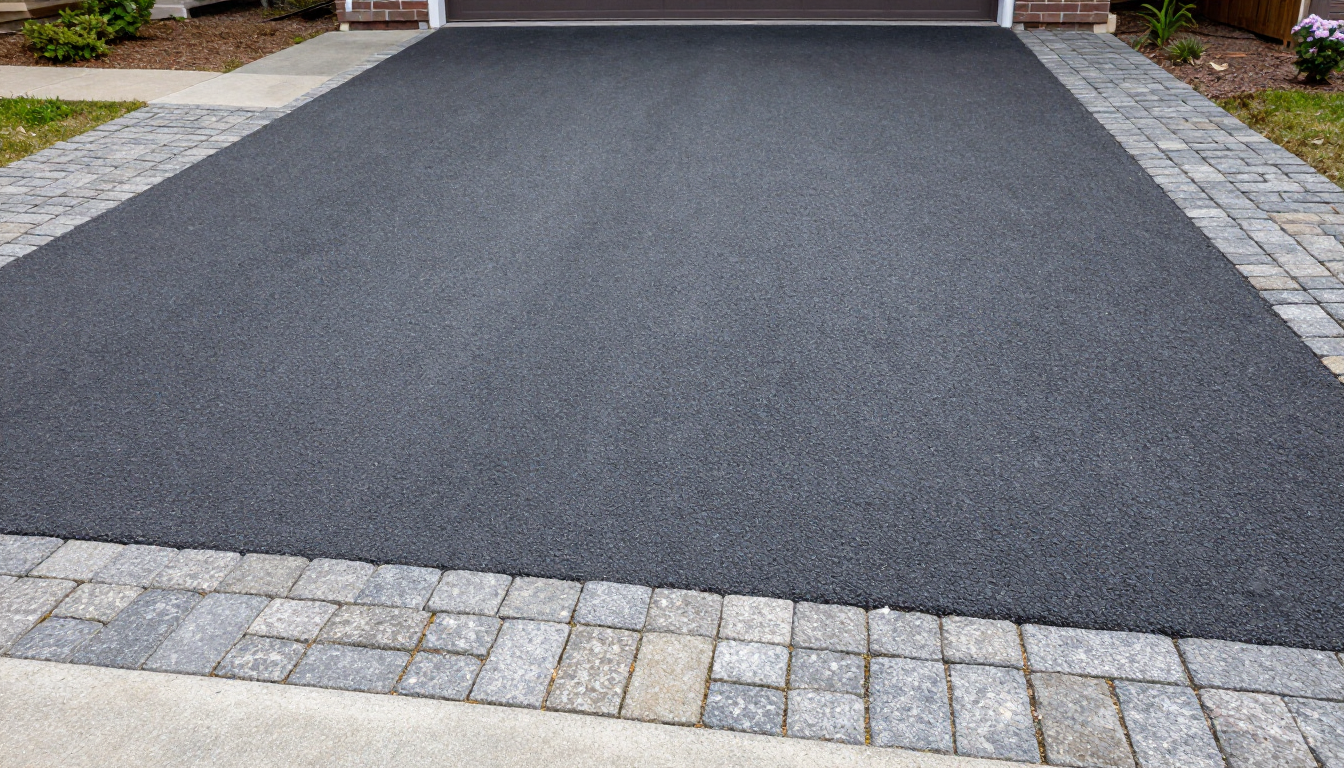
Sunken areas usually mean the sub-base was too thin, was not compacted properly, or has been softened by water over time. The fix is to lift the blocks in that area, correct and compact the sub-base and bedding, then relay and re-joint the original blocks. When we survey a driveway, we look at the falls, the edge restraints and where water goes, not only the visible surface. If the driveway is beyond repair, we can talk you through replacement options on our driveways in Dublin page, including mixed designs such as a tarmac driveway with a cobblelock border.
A Simple Winter Routine for Your Driveway
Most homeowners only need a short routine to keep cobblelock in good order between November and March. Sweep regularly while leaves are falling. Treat moss and algae in a dry spell before it takes hold. Re-sand any open joints once the surface is dry. Use grit rather than heavy salt on icy mornings, and keep metal tools off the blocks. Walk the driveway once a month and note any new dips, loose blocks or standing water.
Small issues caught in winter are usually quick to put right. Left until spring, the same open joints and soft patches can spread across a much larger area.
Expert Help Across Dublin, Kildare, Meath and Wicklow
Regular cobblelock driveway maintenance through the winter keeps the blocks locked, the surface safe and the driveway looking well for years, and it is far cheaper than repairing sunken areas later. We install and repair block paving for homes and businesses across Dublin, Kildare, Meath and Wicklow, and every project starts with a survey and consultation.
If your driveway has sunken areas, loose blocks or drainage problems, contact Paving Design Ltd to arrange a free consultation. Call us on 087 351 0001 or email info@pavingdesignltd.ie.
Cobblelock Driveway Maintenance Through a Dublin Winter
November 9, 2026
Share
Cobblelock Driveway Maintenance Before the Frost
Good cobblelock driveway maintenance over winter comes down to four jobs: clear leaves and debris often, remove moss and algae before it spreads, keep the joints topped up with dry jointing sand, and deal with sunken or rocking blocks early. Done in November, this keeps a block paved drive in Dublin, Kildare, Meath or Wicklow safe and sound until spring.
Below we set out why block paving suffers in an Irish winter, how we clean it without damaging it, how to keep the joints full, what to use on ice, and the signs that a driveway needs more than a clean.
Why Block Paving Struggles in an Irish Winter
A cobblelock paving surface is made of individual concrete blocks laid on a compacted sub-base and a bed of sharp sand, with fine sand brushed into the joints. The sand in those joints is what locks the blocks together. When the joints are full, the blocks share the load from a car and the surface stays level.
Winter attacks that system in several ways. Long periods of rain and short days mean the surface rarely dries out, so moss, algae and lichen take hold in shaded areas and along the joints. Fallen leaves sit on the blocks, hold moisture and stain the concrete. Heavy rain and careless power washing wash jointing sand out, and once the joints are open, water can reach the bedding layer. On the colder nights, water that has got into the joints and the bedding can freeze and expand, which loosens blocks further.
None of this happens overnight. Most of the problems we are called out to in spring started as a small patch of moss or a few empty joints the previous autumn.
Clearing Leaves, Moss and Algae From Cobblelock
Start with the simple job. Sweep the driveway with a stiff outdoor brush every week or two through November and December, paying attention to corners, edges beside walls and the area under hedges and trees. Leaves left on cobblelock for weeks leave tannin stains that are hard to shift later, and wet leaf litter is slippery underfoot.
For moss and algae, work in this order:
- Scrape out thick moss from the joints with a block paving knife or an old flat blade, taking care not to dig out the jointing sand underneath.
- Brush the surface hard to lift loose growth, then sweep it up rather than washing it into the drains.
- Apply a moss and algae treatment made for block paving, following the label for dilution and dry weather before and after application.
- Leave the treatment to work for the time stated on the product, then brush off the dead growth.
- Check the joints afterwards and top up any that have lost sand.
Choose a dry spell for any treatment. Products applied just before rain are diluted and washed away before they can work, and some need several dry hours to take effect.
Power Washing Cobblelock Without Damaging It
A pressure washer will make cobblelock look new, but used carelessly it does more harm than good. A narrow, high-pressure jet held close to the surface strips the jointing sand out of every joint it crosses and can etch the face of the blocks. We use a rotary surface cleaner attachment where possible, keep the nozzle at a low angle and a sensible distance from the paving, and avoid pointing the jet directly along the joints.
Whoever does the cleaning, the joints must be re-sanded once the surface is dry. A driveway that has been power washed and left with open joints is far more likely to have weeds, loose blocks and sunken areas by the following year.
Re-Sanding Block Paving Joints
Re-sanding block paving joints is the single most useful piece of cobblelock driveway maintenance. Full joints keep the blocks locked together, slow down weed growth and stop water reaching the bedding layer.
- Use kiln-dried or silica jointing sand, not building sand. It is fine and completely dry, so it flows down into narrow joints.
- Only re-sand when the paving is fully dry. Damp sand sticks at the top of the joint and leaves a void underneath.
- Spread the sand thinly over the surface and brush it diagonally across the joints until they are full to just below the top edge of the blocks.
- Sweep off the excess so it does not get walked into the house or washed into gullies.
- Check again after a few weeks of rain and top up any joints that have settled.
Dry days in November can be few, so it is worth keeping a bag of jointing sand in the shed and using the first dry afternoon after cleaning. If you plan to seal the paving, leave it until a settled spell in spring or summer. Most block paving sealers need a dry surface, a run of dry weather and temperatures above the minimum the manufacturer sets, which rarely line up in an Irish winter.
Ice, Grit and De-Icing Salt on Block Paving
Cobblelock drains through its joints, but a surface that is shaded for most of the day can stay icy well into the morning. For a short run of frosty mornings, a light scattering of grit or sand gives grip without much risk to the paving. Brush it off once the cold spell has passed so it does not block drainage channels.
Rock salt works, but use it sparingly. Heavy, repeated use can leave white marks on concrete blocks and can harm lawns and plants beside the driveway. Never use a metal-edged shovel or an ice chipper on the blocks, as it chips the edges and the surface layer. A plastic snow shovel and a stiff brush do the job without damage.
Signs Your Cobblelock Driveway Needs Repair
Cleaning and re-sanding deal with the surface. Some problems point to the layers underneath, and those need a paving contractor rather than more brushing. Look out for these signs:
- Dips or ruts where cars park or turn, which hold puddles after rain.
- Blocks that rock or move when you stand on them.
- Edge blocks or kerbs pulling away from the rest of the driveway.
- Water pooling against the house or garage rather than running to a drain or gully.
- Cracked or broken blocks, often near the entrance where vans and delivery lorries turn.
Sunken areas usually mean the sub-base was too thin, was not compacted properly, or has been softened by water over time. The fix is to lift the blocks in that area, correct and compact the sub-base and bedding, then relay and re-joint the original blocks. When we survey a driveway, we look at the falls, the edge restraints and where water goes, not only the visible surface. If the driveway is beyond repair, we can talk you through replacement options on our driveways in Dublin page, including mixed designs such as a tarmac driveway with a cobblelock border.
A Simple Winter Routine for Your Driveway
Most homeowners only need a short routine to keep cobblelock in good order between November and March. Sweep regularly while leaves are falling. Treat moss and algae in a dry spell before it takes hold. Re-sand any open joints once the surface is dry. Use grit rather than heavy salt on icy mornings, and keep metal tools off the blocks. Walk the driveway once a month and note any new dips, loose blocks or standing water.
Small issues caught in winter are usually quick to put right. Left until spring, the same open joints and soft patches can spread across a much larger area.
Expert Help Across Dublin, Kildare, Meath and Wicklow
Regular cobblelock driveway maintenance through the winter keeps the blocks locked, the surface safe and the driveway looking well for years, and it is far cheaper than repairing sunken areas later. We install and repair block paving for homes and businesses across Dublin, Kildare, Meath and Wicklow, and every project starts with a survey and consultation.
If your driveway has sunken areas, loose blocks or drainage problems, contact Paving Design Ltd to arrange a free consultation. Call us on 087 351 0001 or email info@pavingdesignltd.ie.
Recent Posts